I didn’t go to Nepal for the views. I went because something—some quiet, persistent whisper inside me—told me to. I couldn’t explain it. I just knew I was supposed to go, like there was a message waiting for me somewhere between the dust and the mountains. I thought I’d find peace. Healing. A grand realization that would finally make sense of everything stirring inside me. But I didn’t find any of that—not in the streets of Kathmandu, not in the altitude-thin air of the Himalayas. What I found was discomfort, disillusionment, and a haunting sense that maybe I wasn’t cut out for the life I thought I wanted. The truth didn’t land until much later—two years later, in fact—after I stopped searching and finally sat still. Only then did I realize: Nepal wasn’t a failure. It was a seed. And seeds take time.
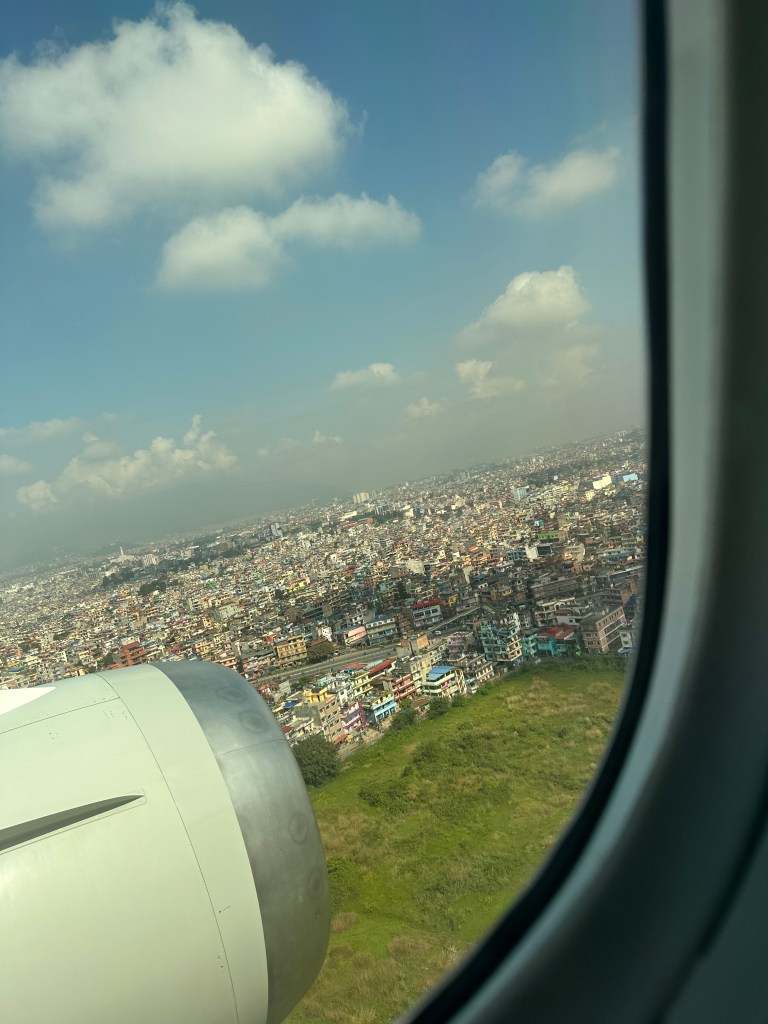
I was snapped awake during a trip to Costa Rica in November 2022. Something shifted. I became acutely aware that I needed to make major changes—for my health, my sanity, and my spiritual growth. Signs and synchronicities started showing up everywhere, nudging me toward deeper self-exploration. I felt drawn to learn about Buddhism and Hinduism, and slowly began following the breadcrumbs. I started meditating, practicing yoga, and making a conscious effort to slow everything down. What I discovered, more than anything, was a longing for peace.
Then came the pull toward Nepal.
It was quiet at first, but unmistakable—the same kind of pull that had led me to Costa Rica a year earlier. I couldn’t explain it. I didn’t even know where Nepal was on a map. I knew nothing about its culture, its people, or its customs. And yet, I felt compelled to go. I started reading, researching, and reaching for meaning, convinced Nepal held the answers to the question that had begun to burn in my chest: What is my purpose?
Once I began to understand what Nepal might have to offer, my monkey mind kicked into overdrive. Looking back, this is where I lost connection with the quiet whisper that had guided me up to that point. Instead of trusting that still, intuitive pull, I started thinking. Planning. Strategizing. I shifted from soul to ego—trying to make meaning instead of letting it unfold.
I’ve always loved hiking. In my thirties, I even dreamed of becoming a mountaineer—until I did a sub-freezing overnight test run in my own front yard one December and realized… yeah, no. I like sleeping warm. Hiking at lower altitudes sounded just fine. So maybe Nepal was about rekindling my love for the mountains?
I’d also been practicing yoga religiously and thought, maybe this was the moment to deepen my path—get certified in yoga and meditation, bring Eastern philosophy back home to Montana, and help others find the peace I was chasing. Nepal, in my mind, became a symbol. A destination of healing, of answers, of transformation.
But once I got caught up in trying to define what it all meant, the inner voice went quiet. And I was left fumbling through the rest of the planning—and eventually, the trip itself—with no spiritual GPS. Nothing unfolded the way I expected. None of the insights came. If I’m being honest, the whole thing turned into a bit of a disaster, like climbing Everest with no guide and no preparation.
I arrived in Kathmandu in October 2023, scheduled to stay for five full weeks. I was bursting at the seams with anticipation—ready to experience true freedom for the first time in my adult life. No responsibilities. No one to answer to. Just me.
I started raising kids at 19. For my entire adulthood, I’d been responsible for someone else. I longed for the wildness of my childhood—the days spent roaming the mountains from sunup to sundown, untethered and free. And now, I was in a brand-new country. Unlike family vacations, this trip was mine. I could see what I wanted, when I wanted. Sleep in or hike all day. Eat when I felt like it—or not at all.
I love traveling with my family, but this time was different. This was for me. It was supposed to refill my cup after a lifetime of serving others and living on the back burner.
My monkey mind had carefully crafted an itinerary: a three-week yoga teacher certification to kick off the trip, followed by two weeks living with a host family and volunteering at their substance abuse recovery center and children’s orphanage. During that final phase, I’d have the freedom to sightsee and explore, while also immersing myself in their world and helping however I could. On paper, it was perfect—an ideal blend of purpose and peace, drafted by the version of me that thought it knew what I needed.

At the same time, I had unknowingly begun waging war on my relationship with money.
I grew up without much—watching my parents struggle and internalizing the belief that wealthy people were greedy or bad. I raised my three daughters on very little, and my happiness rose and fell with the two-week cycle of living paycheck to paycheck. Later, through years of hard work and wise investing in real estate, my life changed. Our family crossed into a new world—financial stability, even abundance. Suddenly, I had become what I used to judge. Not because I was greedy, but because I had never learned how to feel safe with money.
Underneath it all, I was drowning in guilt and shame. I felt like I didn’t deserve what I had. I had more than most people in my own country, and far more than many in places like Nepal. I was terrified of becoming poor again, so I did what I thought was right: I gave. I gave money, time, and energy, hoping to earn some kind of redemption. But even that turned into a mental tug-of-war. I’d donate generously, then spiral into anxiety—convinced I’d given away my last dollar and would end up back where I started.
Volunteering in Nepal felt like a way to reset. To give from the heart. To shift the narrative.
But none of it went as planned.
First of all, I had no idea how to sit still.
I thought I’d been working on it the year before, and maybe I had—on some surface level—but once I got settled into the yoga retreat center, things got really quiet. And I mean mountaintop quiet. I was truly alone, with nowhere to go. That silence should’ve felt peaceful. Instead, it felt like a confrontation.
The real problem, though, wasn’t the quiet. It was my expectations. I had way too many of them, and zero understanding of how to let go and actually absorb the experience. Instead of being present, I monitored every moment, analyzing whether it aligned with what I thought this journey was supposed to be. Spoiler alert: it never did.
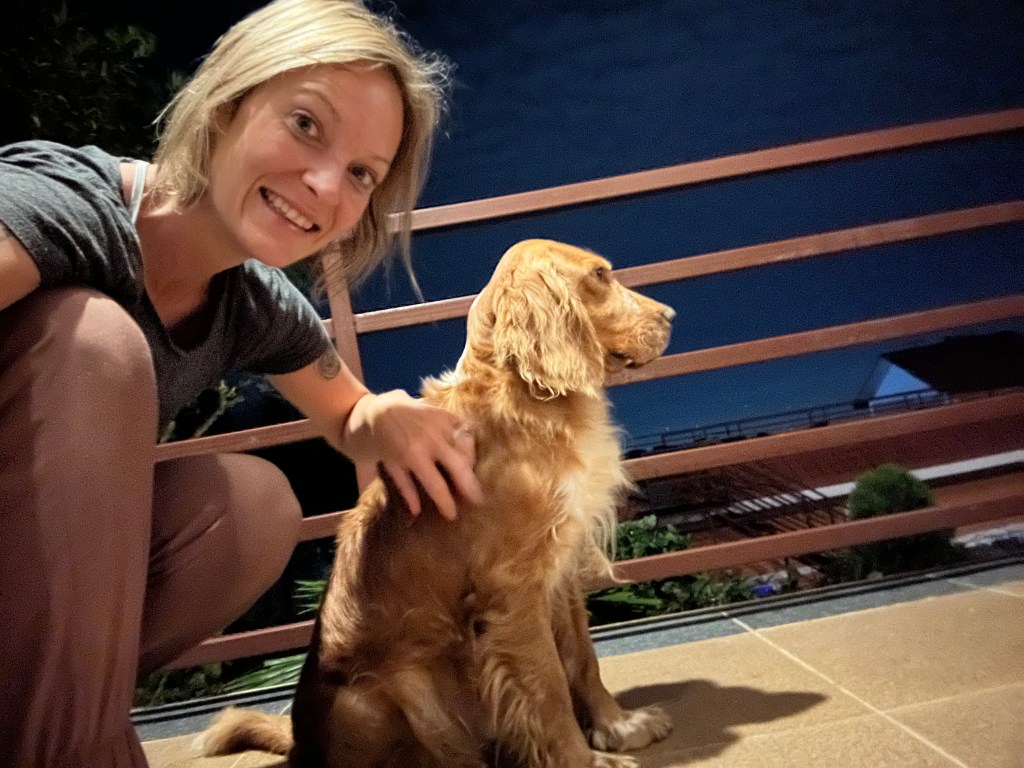
I had signed up for a private room so I could write, recharge, and decompress—especially knowing I’d be anxious around a group of strangers. I’m an introvert. I need solitude to refill my tank. And this trip, after all, was supposed to be about solitude and freedom.
Instead, I ended up with a roommate from North Macedonia—an ex–Peace Corps worker with no attachment to clothing and an endless supply of stories. She was overbearing, aggressive, and wildly inconsiderate… and somehow also lovable when I wasn’t on the brink of losing it. She took over my half of the room (I had expectations of fairness). She walked around naked (I had expectations of modesty). She talked nonstop until well past bedtime (I had expectations of peace, quiet, and not socializing). Basically, she shattered every unspoken rule I had for what this trip was supposed to feel like.
And then there was the retreat itself—perched high on a mountain, miles from anything. Behind us, a cliff. In front of us, a muddy road that wound endlessly downhill. If I wanted to “escape” and decompress, it required a full-on hike—straight down, then straight back up. Not exactly the leisurely stroll I had envisioned. Especially considering we were doing full-body workouts all day as part of the yoga teacher training.
Classes ran from 8 a.m. to 6 p.m., six days a week. And while yes, I knew that going in… it somehow didn’t sink in. The structure, the schedule, the noise—it all felt like the opposite of the freedom I had come for. I didn’t feel peaceful. I felt trapped. No—imprisoned.

I started having panic attacks.
The constant overstimulation—emotionally, mentally, energetically—pushed me past my threshold. I began to wall myself off from others just to survive. But in that solitude, my mind turned on itself. I started overanalyzing everything: the retreat center, the people, the teachings, the intentions. Nothing felt real. Everything felt… performative.
I cringed as some students recorded themselves constantly for social media, flowing through asanas with one eye on the camera. Others, just a week into training, were making dramatic vows to abandon their previous lives and commit 100% to the path. It felt like a Kool-Aid retreat, and I wasn’t drinking. I couldn’t. It all left a bad taste in my mouth—one I couldn’t swallow or ignore.
The tipping point came on my seventh night, when I lay in bed listening to my roommate have loud phone sex with a “stupid tourist she was having an affair with.” That was it. I snapped. The next morning, I informed the retreat owners I’d be leaving.

I lasted a week.
I tucked my tail between my legs and admitted what felt, at the time, like complete and utter failure. I called my host family and explained that I wouldn’t be staying in their home after all. I needed solitude. Space. Quiet. I agreed to visit during the day and help where I could, but I booked a tiny hotel room for the evenings so I could rest, reset, and try to find my center again.
As I was driving down the mountainside, I felt an immediate release, a wave of energy and freedom. This was the feeling I needed to assure me I had made the right decision. I felt so much lighter! I checked into a hotel nearby my host family’s house. It was absolutely adorable and exactly what I thought I needed. The lobby was inviting and open. It served fresh tea throughout the day and a free homestyle breakfast every morning if you wanted to join other travelers for a meal. It had a sweet patio with seating to read and people watch as the city walked by. I felt like I could finally explore and get the true healing I was searching for.
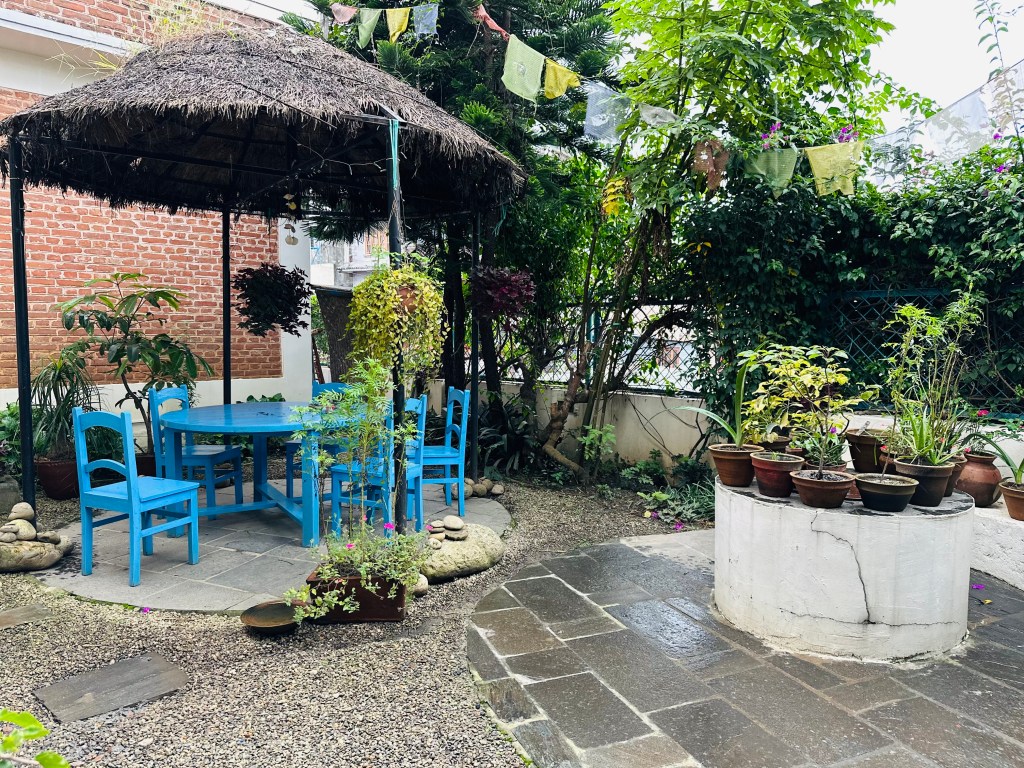
I set my bags down in my hotel room and immediately went out exploring. Nothing was scheduled, nothing was planned. I simply roamed. For the first time in weeks, I had space—and it felt good.
That evening, I got a message encouraging me to stop by my host family’s house to meet them and say hello. I didn’t feel ready. I was still coming down from the chaos of the retreat. But the people-pleaser in me couldn’t say no, so I went.
They were lovely.
The wife was warm and welcoming. The kids were excited to have a guest and went above and beyond to make me feel at home. I was given a tour of their compound—which was really a few houses side by side, all enclosed by a shared perimeter fence—and introduced to the children. I think there were 14 of them, most of whom had once lived on the streets before being taken in. Their mission was clear: raise each child, get them through school—including college—so they could build lives that didn’t lead back to the streets.
The wife managed the orphanage. The husband oversaw the substance abuse recovery side of their work. They relied almost entirely on donations from visitors—outsiders who stayed with them, people like me. I had planned to give a generous donation at the end of my visit, but more than that, I truly wanted to immerse myself in their lives, to learn from them, to contribute something meaningful. I had (yep, there it is again) expectations—that I’d make lifelong friends, that I’d return again and again.
But the ick crept in.
My monkey mind took over, and the anxiety came roaring back—likely because I hadn’t had time to properly decompress after the retreat. I started questioning everything. Was this a scam? Was I just a walking dollar sign in their eyes? The authenticity I was so desperate for suddenly felt out of reach. I didn’t feel like a person—they made me feel like a donation. And that old war with money? It reignited like a full-blown battlefield: missiles, tanks, flanks. Every unresolved fear about wealth and worth showed up to take me down.

I returned to my hotel that night deflated and hopeless. I seriously considered abandoning the trip altogether and flying home. And, as an anxious and guilt-ridden mind does, I spiraled further: You don’t deserve to be here. Your family needs you. You’ve thrown away your career. You’re not producing. You’ve already traveled enough this year. You’re selfish. You’re greedy. You’re ungrateful.
That night, I self-imploded in my sweet little hotel room and cried myself to sleep.
The next day, my host family messaged me with an offer: the husband would give me a personal tour of the city and take me to some of Kathmandu’s must-see destinations. I thought it sounded like a great opportunity to get to know him better, since we hadn’t spoken much during my initial visit.
The next morning, he picked me up on his scooter and whisked me away.
Almost immediately, the same uncomfortable feeling I’d had the first night returned. I didn’t feel like a guest—I felt like a walking dollar sign. And this time, it felt like I was being paraded around for others to see. He took me to one of his favorite places to “meet rich travelers”—a small hotel popular with Europeans. He explained that a friend of his worked there and also ran an orphanage. The two of them, he said with pride, had gotten good at chatting up foreigners, sparking interest in their causes, and ultimately securing donations.
I felt like a sitting duck. A target. And while I knew it wasn’t technically a scam—these people did need help—the way it was being orchestrated felt intentional and transactional. I had already intended to donate. I’d hauled the world’s largest suitcase filled with children’s clothing across the globe as a gift. I was already in. I didn’t need to be convinced—but it seemed that was all anyone cared about.
I had also offered to help at the substance abuse center, but was told my help wasn’t really needed. What they needed was money. I understood why, but emotionally, I was crushed (failed expectations…again), now understanding money was all they wanted from me. I felt… used.
We spent four or five hours touring temples and seeing some of the city’s most iconic sights. The history was breathtaking. The traditions, rich and ancient. But my discomfort only grew. Peddlers approached constantly—offering prayers and blessings, always with an unspoken expectation of payment. I understood this was part of how things worked, but I wasn’t in a place to receive it. I wasn’t grounded enough. The vision I had of Nepal as a peaceful, loving refuge began to collapse.
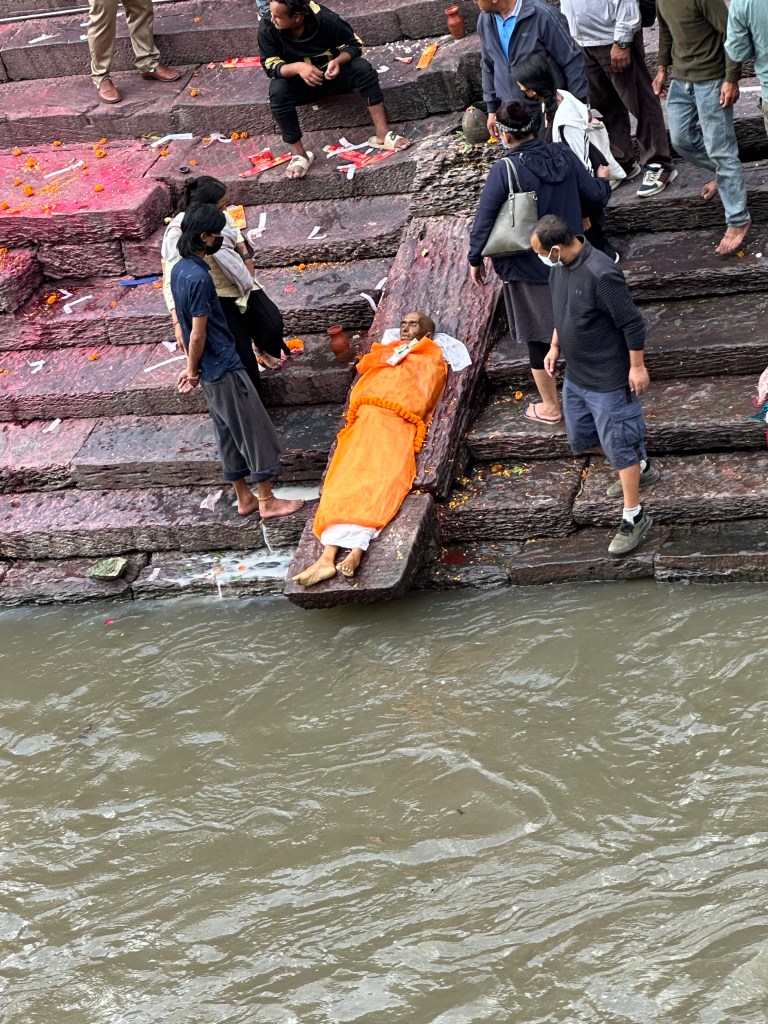
Everything felt fake.
At the end of the day, I called my husband in tears. I told him I was done. I said I was booking a flight home that night and leaving because of everything I had just experienced—because I was disgusted.
That part was true. But the disgust wasn’t about Nepal.
It was about me.
I just didn’t know it yet.
It would take years of reflection to realize that the inauthenticity I kept seeing everywhere else was coming from within. I was the one wearing a mask. I was the one pretending. I had deep-seated issues with money and my own self worth that wasn’t ready to be exposed at that time. And Nepal didn’t fail me. It held up a mirror I wasn’t ready to face.
I didn’t leave Nepal with a yoga certificate or a spiritual awakening or a newfound sense of peace.
I left raw. Cracked open. Disoriented. Disappointed in myself. What I had expected to be a soul-satisfying adventure turned into an emotional excavation I didn’t know I’d signed up for.
But now, with space and time between me and that mountain, I see it differently.
Nepal wasn’t the problem. Nepal didn’t fail me. It stripped me bare. It showed me the stories I had been telling myself—about who I was, what I needed, and what made me worthy. It forced me to confront the version of me who needed everything to have a purpose, a payoff, a perfect arc.
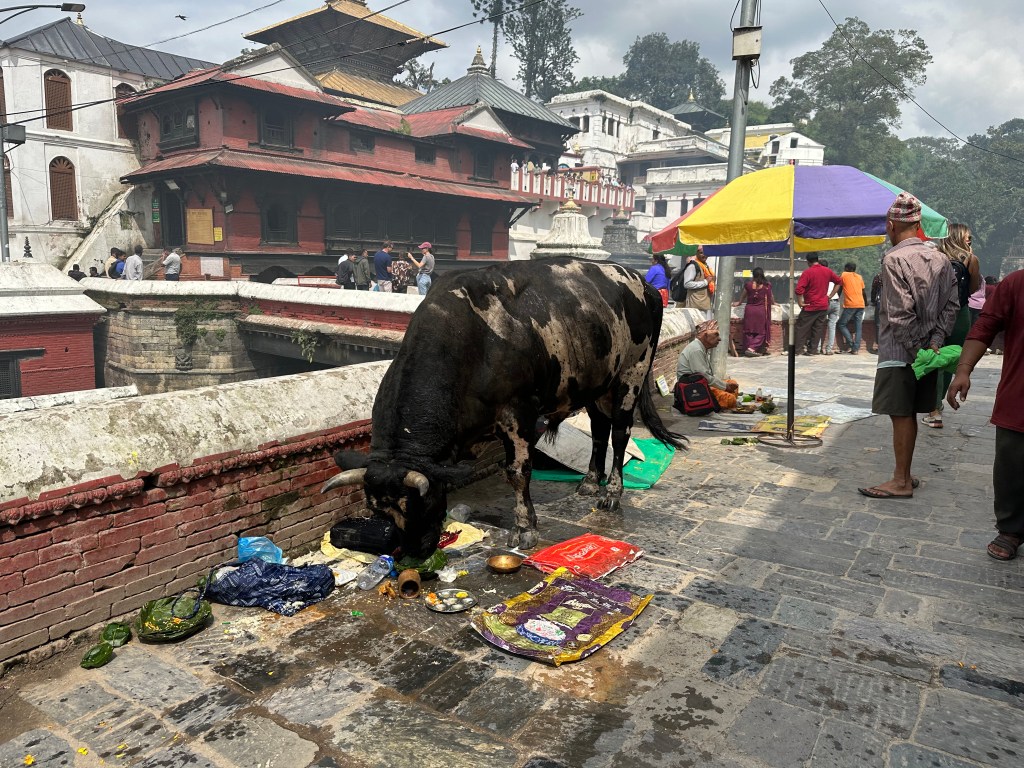
That version of me was exhausted. Grasping. Afraid.
I thought I went to Nepal to find peace. But peace didn’t meet me there—not because it wasn’t available, but because I hadn’t yet created it within myself.
It’s taken years to understand that the calling that led me there wasn’t a call to change my life. It was a call to see it—honestly, clearly, without the noise. And the truth was waiting for me, not on a mountaintop, but in the stillness I avoided once I got back home.
That trip didn’t mark the start of my travel life.
It marked the beginning of my inner one.


 After the Before
Leave a comment